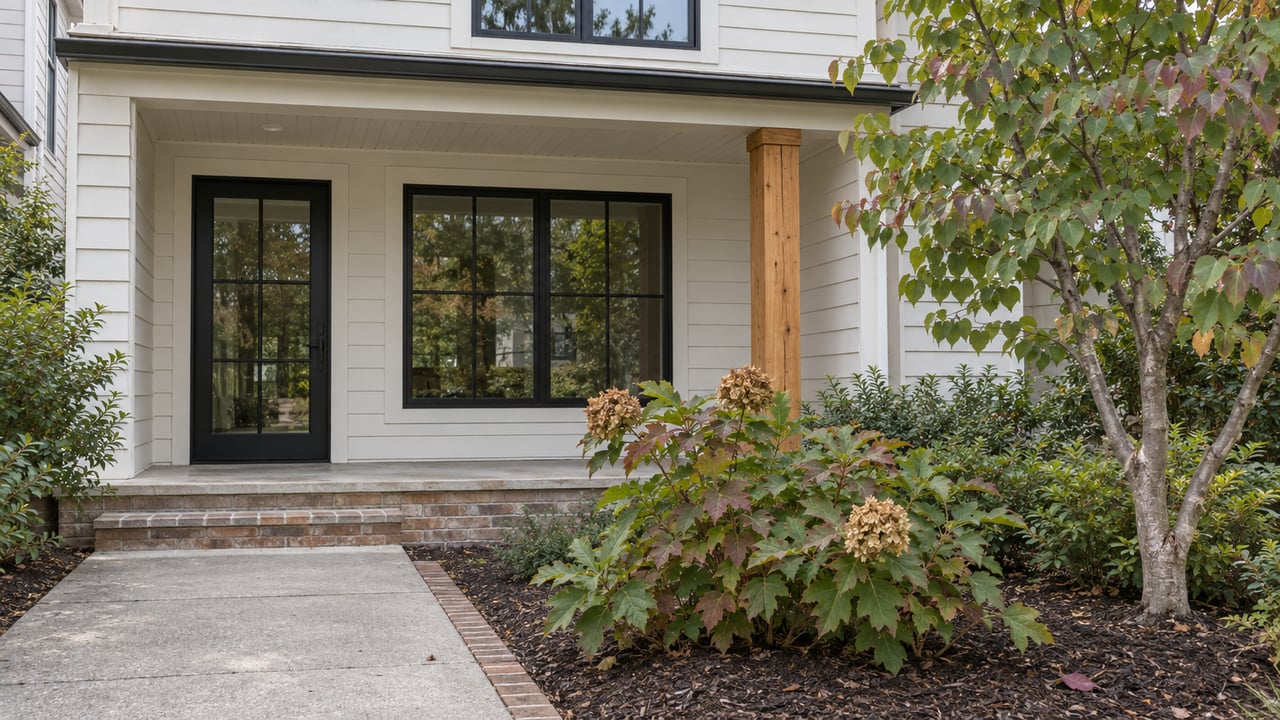
At 908 Williamson Drive in Hayes Barton, a house built in 1925 is gone. In its place on the 2.4-acre lot, the developer Chappell, through 908 Williamson LLC, has planned 17 townhomes. Grading was underway in December 2025, and construction was forecast to start in early 2026. In April 2026, The News & Observer reported those townhomes were valued at $2 million each.
The project is also part of a lawsuit. Hayes Barton homeowners sued the City of Raleigh over how it adopted the zoning rules that made the project possible. In December 2025, the North Carolina Court of Appeals dismissed the claims against the developers but allowed the case against the city to go forward. The case was still pending as of April 2026.
A $2 million townhome built under "missing middle" rules sounds like a contradiction. It isn't. Raleigh's zoning reforms changed how many homes can fit on a lot. They did nothing to the price of the lot. A buyer comparing infill townhomes across Raleigh gets further by asking what the land under each one is worth than by asking what kind of building it is.
The discount is real, and it's measured against the street
Raleigh's 2021 and 2022 text changes allowed two-family homes in most residential districts, opened more areas to townhouses, and allowed some three-unit apartment buildings. A 2022 follow-up added tiny-house duplexes and two-unit townhouses in R-4 districts. An April 2025 clarification spelled out that one or more townhouse buildings can sit on a single lot.
The math behind this is simple. When a builder can put two, five or 17 homes on land that used to hold one, each home carries a smaller share of the land cost. So a townhome comes in cheaper than a new detached house on comparable land. The reported price points show how big that discount is, and how much the land moves the starting point.
| Example | Reported figure | Source and date |
|---|---|---|
| New detached home inside the Beltline | About $1 million to $1.1 million on average | Planning Director Pat Young, February 2026 |
| Side-by-side two-unit townhome | $550,000 to $700,000 | Pat Young, February 2026 |
| Yarborough Park, Mordecai | Two detached homes assessed above $600,000; townhouses behind them assessed at about half that | City of Raleigh, February 2025 |
| 908 Williamson Drive, Hayes Barton | About $2 million per townhome | The News & Observer, April 2026 |
These are estimates and assessments from different dates, not matched sales, and none of them is a current market reading. Still, they point the same way. At Yarborough Park, the townhouses were assessed at roughly half the value of the detached homes at the entrance of the same development. That's the discount working on a single piece of land. In Hayes Barton, the same building type carries a reported value about twice the citywide inside-the-Beltline average for a new detached house. The discount still applies there. It just starts from Hayes Barton land values.
Young put it this way when he described the price gap to The News & Observer:
"It's still expensive, of course, but you're housing two families rather than one, right?"
For a buyer, this changes the comparison. Searching "townhome" across Raleigh doesn't give you a price tier. A two-unit townhome on a lot near downtown and a townhome in Hayes Barton are priced against what new detached homes cost on their own streets. Benchmark each one against its own street.
Most of what the rules allow hasn't been built yet
Through July 14, 2026, the city's missing-middle tracker counts 4,936 units enabled by the reforms. Townhouses make up the largest share, and most of them are still on paper.
| Status, as of July 2026 | Townhouse units | All missing-middle units |
|---|---|---|
| Constructed | 417 | 966 |
| Approved or permitted | 1,714 | 3,180 |
| Under review | 566 | 790 |
So for every townhouse unit finished under these rules, about four more are approved and waiting. That matters for anyone deciding whether to buy a resale townhome now or a new one later. The supply of this housing type in Raleigh is still mostly a pipeline. The total also covers duplexes, ADUs, tiny houses and apartment buildings, and the city counts units by subdivision, site review and permit. It isn't a count of teardowns, and it doesn't measure the area inside the Beltline.
Location matters here too. In February 2026, The News & Observer reported that 39.4% of the built and planned missing-middle units were in southeast Raleigh. That's a council-district breakdown, not a measure of the Beltline. So the pipeline is spreading across the city, onto land priced very differently from Hayes Barton.
Some of it won't reach the for-sale market at all. In September 2026, the Triangle Business Journal named Andor Place in northeast Raleigh as a missing-middle project. Its operator, American Homes 4 Rent, describes Andor Place as a single-family rental community in ZIP code 27604. It offers three- to five-bedroom homes, adds new homes monthly, and takes preleases. When you read the citywide unit counts, keep in mind that some of those units are rentals.
Approval and litigation status affect your timeline
The Hayes Barton case isn't the only one. In King Charles, Raleigh Country Club sued the city and a local businessman over Chailyn's Cottages at 2501 Poole Road. The city approved the plan administratively in May 2024: 16 three-bedroom townhomes in eight buildings, each about 1,695 to 1,730 square feet, on 2.14 acres where a 1938 house stood. That suit was also pending as of April 2026.
These cases had different starting points. The Williamson Drive plan went before Raleigh's Board of Adjustment, which approved it 3–0 in July 2025 after a revision added the required transitional protective yard. Chailyn's Cottages moved through an administrative approval. In both cases, an approved plan was followed by a legal challenge. The News & Observer has reported that the wider debate over Raleigh's growth has led to "a wave of lawsuits, creating uncertainty and delays." Neighborhood groups including Midtown Neighbors United and residents of Glenwood-Brooklyn are organizing around development questions.
At the state level, Senate Bill 497 would require every North Carolina municipality to allow missing-middle housing in all residential districts. It was stalled in the Senate as of April 2026.
None of this means a project is unsound. It does mean that for pre-construction or early-phase infill, the project's status belongs in the purchase timeline. These questions are worth putting to the builder and your own attorney early:
- Has the site plan or subdivision been approved, and is any appeal or lawsuit open against it?
- Is each townhouse on its own lot, or does the whole building sit on one lot? The city's definitions allow both.
- Which completed homes on the same street or block are the fair price comparisons: detached houses, older homes, or other new townhomes?
- If construction hasn't started, what does the contract say about delays?
The teardown rate shows how fast land is changing hands
Raleigh recorded 252 demolitions in 2025, up from 124 in 2024 and 105 in 2023. Young said most were teardowns. He also said the city doesn't yet have enough data to tell whether the missing-middle rules are preventing teardowns, and that it plans to work with researchers on the question.
This reinforces the land-price point. A modest older house on a large lot in an established area has value as a site for whatever can be built there next. On some streets that's one large detached house, and on others it's a row of townhomes. A buyer looking at an older home on a big lot is in the same land market as the builders, whether or not they plan to build anything.
For current regional context, Doorify MLS's August 2026 snapshot covers its full 52-county area and combines single-family homes, townhouses and condos. It reports a $405,000 median sale price, down 4.3% from a year earlier. New listings rose 3.8% to 4,420, and the median price per square foot slipped 1.9% to $204. That figure describes the region, not Raleigh townhomes. Doorify says its Market Stats tool can filter by property type and drill down to the city level, but the published August snapshot doesn't break out Raleigh's attached and detached sales. Even a city-level split would blend Hayes Barton with southeast Raleigh, so street-level comparables do more for a buyer than any citywide median.
FAQ
Are missing-middle townhomes in Raleigh always cheaper than single-family homes? They tend to be cheaper than a new detached home on comparable land. At Yarborough Park in Mordecai, the townhouses were assessed at about half the value of the detached homes at the entrance, according to the City of Raleigh in February 2025. Across neighborhoods, though, a townhome on high-value land can cost more than a detached house elsewhere in the city.
Is more townhome supply coming? The city's July 2026 tracker shows 1,714 townhouse units approved and 566 under review, against 417 constructed.
Were the Hayes Barton and Raleigh Country Club lawsuits resolved? The most recent accessible reporting, from April 2026, described both as pending.
If you're weighing an infill townhome against an older house on the same street, or trying to figure out where a project stands before you commit, Ensemble Properties can pull the street-level comparables and walk you through the approval history so you know what you're pricing. List With Ensemble, or let us help you buy with the same block-by-block detail.
This article is general information, not legal, tax or financial advice. Consult a qualified professional about your situation.